
Know Before You Land: What We Watch in 50 U.S. Cities
SAG tracks reported threats across the 50 largest U.S. cities every day. What we watch, why it matters to a traveling principal, and how it becomes a plan.
A principal’s risk changes the moment the itinerary does. The home is assessed, the office is assessed, the staff are briefed. Then the family flies to a city none of them has studied, for a board meeting, a game, a closing or a week away, and the plan they rely on stays behind.
Most trips pass without incident. The ones that do not tend to share a detail: the warning signs were in public reporting before the traveler arrived. A protest route announced days ahead. A run of robberies outside the same hotels. A disruption at the airport. Nobody was reading for that traveler.
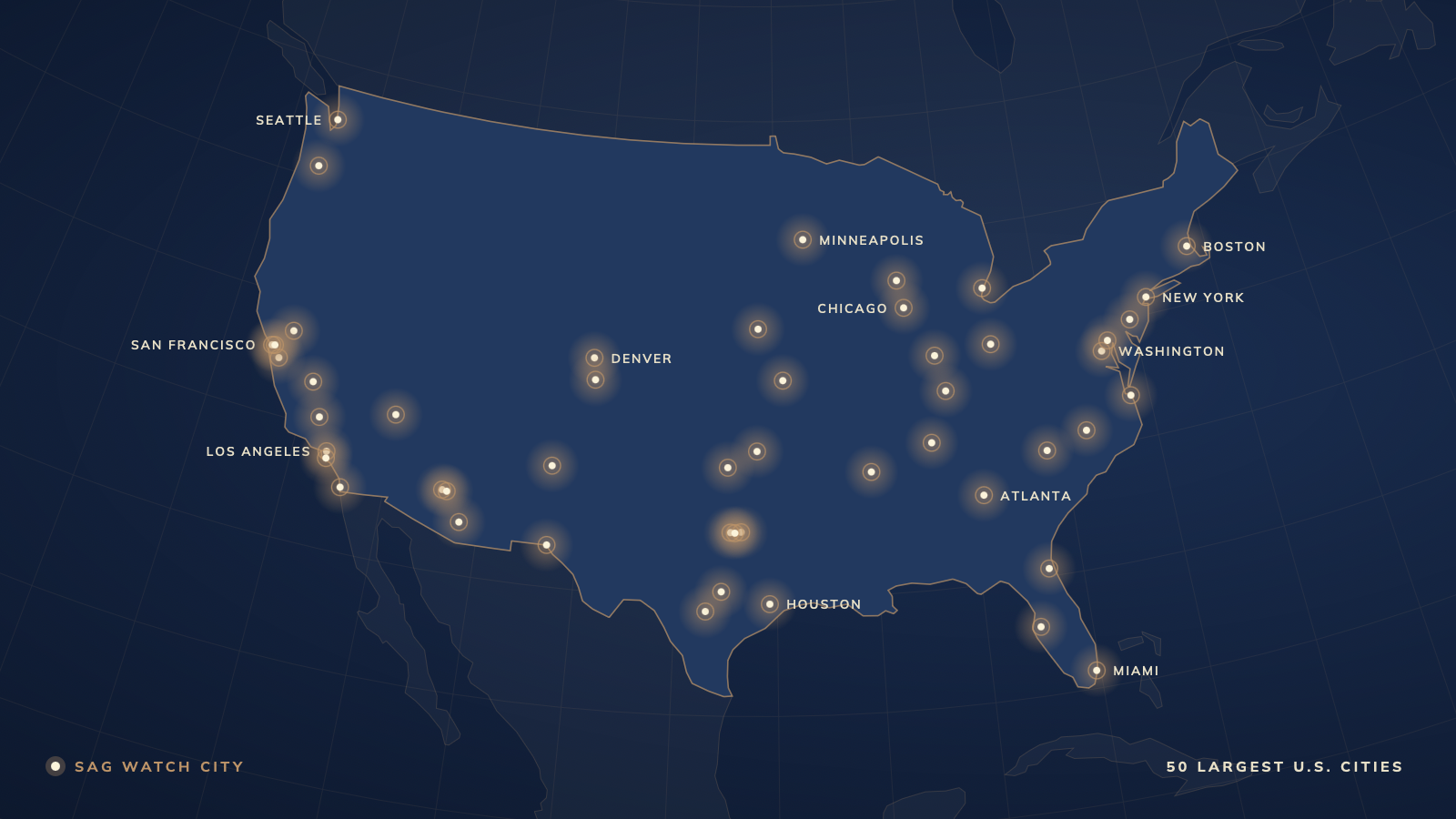
SAG reads for them. Every day our analysts review reported threats across the 50 largest cities in the United States, and we keep more than a year of history on each one. This article explains what we watch, what it can and cannot tell you, and how it becomes a plan for a specific trip.
What we watch
- Violent crime and gang activity. Where it is concentrated, at what hours, and whether it is moving toward the districts where principals stay, dine and meet.
- Robbery and theft aimed at wealth. Watch and jewelry robberies, follow-home robberies, vehicle theft, and crimes against holders of cryptocurrency.
- Civil unrest. Planned demonstrations, the routes and buildings involved, and how past events in that city have unfolded.
- Cyber incidents and dark web exposure. Attacks on local hospitals, hotels, airports and utilities, and leaked data that names a principal, a family member or a company.
- Aviation and flight disruption. Incidents, ground stops and security events at commercial airports and private terminals.
- Border security and trafficking. Smuggling and trafficking activity and the enforcement operations that affect roads, airports and neighborhoods.
- Fires, outages and hazardous incidents. Anything that closes a route, a venue or a hospital.
- Large gatherings. Concerts, conferences, festivals and major games, which change crowding, traffic and police coverage for everyone in the city.
The 50 cities
We watch the 50 largest U.S. cities by population because that is where most business travel, most events and most private aviation traffic are concentrated: New York, Los Angeles, Chicago, Houston, Phoenix, Philadelphia, San Antonio, San Diego, Dallas, Jacksonville, Austin, Fort Worth, San Jose, Columbus, Charlotte, Indianapolis, San Francisco, Seattle, Denver, Oklahoma City, Nashville, Washington, El Paso, Las Vegas, Boston, Detroit, Portland, Louisville, Memphis, Baltimore, Milwaukee, Albuquerque, Tucson, Fresno, Sacramento, Mesa, Atlanta, Kansas City, Colorado Springs, Omaha, Raleigh, Miami, Virginia Beach, Long Beach, Oakland, Minneapolis, Bakersfield, Tulsa, Tampa and Arlington, Texas. Clients on a Threat Intelligence retainer add the places that matter to them, such as a second home, a school, a resort town or a city abroad.
What an outlook can and cannot tell you
No one can predict a specific incident, and anyone who says otherwise is selling comfort. What can be forecast is conditions. Reported incidents cluster by place, hour and type, and those patterns hold from week to week. Cities publish their calendars: court dates, permits for marches, games, conventions, visits by public figures. Set the pattern beside the calendar and the dates of a trip, and you have an outlook: where the risk is likely to be higher, when, and what to change because of it.
That is the difference between threat intelligence and the news. The news reports what happened. An outlook says what it means for one person, in one place, on particular days.
How it becomes a travel emergency plan
For a client, the outlook is the first page of a plan built around the trip. A SAG travel emergency plan covers:
- The city outlook for your dates. What has been reported near your hotel, venue and routes, and what is scheduled while you are there.
- Arrival and movement. Airport or private terminal, vetted ground transport, primary and alternate routes, and areas to avoid by hour.
- Where to go if something happens. The nearest trauma center, a safe location away from the hotel, and the route to each.
- Who to call. One number that reaches SAG at any hour, plus local police, medical and legal contacts confirmed in advance.
- Communications and check-ins. How the family, staff and office stay in contact, and what happens when a check-in is missed.
- Trigger points. The conditions agreed in advance for changing hotels, leaving early or not going at all.
- Monitoring while you travel. SAG watches the city for the length of the trip and contacts you if conditions change.
When to call us
- A trip to a city you do not know well, especially with family.
- Travel tied to a public event: a board meeting, a trial, a premiere, a game, a conference.
- A principal who is in the news, in a dispute or the subject of threats.
- Travel during a period of protest, a major event or severe weather.
- Staff or children traveling separately from the principal.
The right time is before the tickets are booked. The next best time is today.